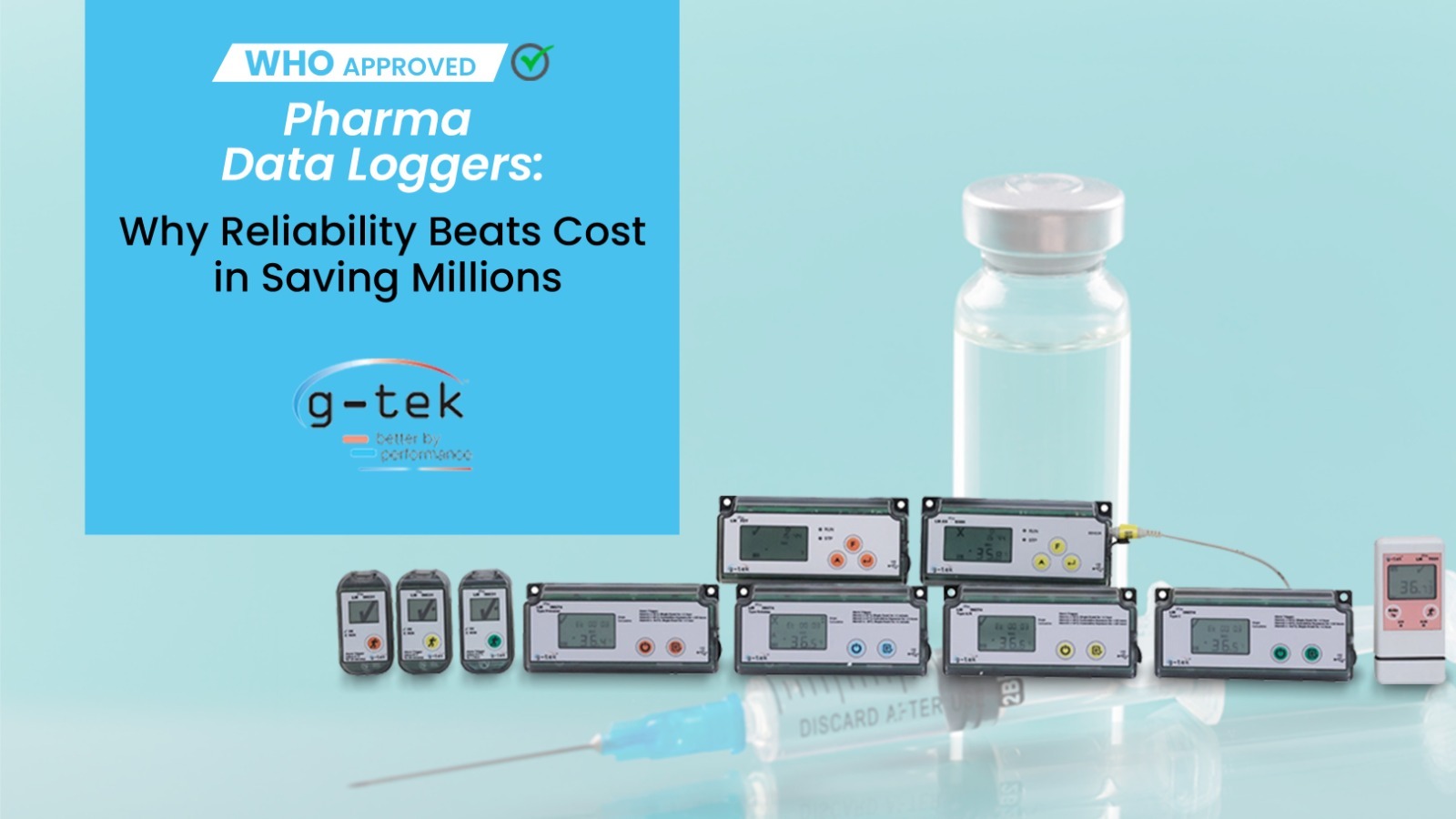
Accurate temperature measurement is critical in furnaces for industrial processes such as heat treatment, ceramics,…
5 factors to keep in mind while selecting a temperature Data logger

Temperature data loggers are generally utilized by engineers, performance contractors, and technicians for observing indoor natural conditions, monitoring patients, changing temperature setbacks, and assessing ventilation, heating refrigeration, and cooling frameworks. Temperature data loggers are also utilized by ecology researchers, scientists, and hydrologists participating consistently in screening soil, air, and water temperature from a remote locations as well.
In most cases, these temperature loggers are easy to use with direct simulation control using with and without computers. Further, with pinpoint accuracy, most temperature logger functions are far superior to most computer-based data acquiring systems. However, not all temperature data loggers are created equal, and with so many choices available today, it can be challenging to know which one is right for your application. In order to ensure that you select the right temperature logger there are 5 golden factors, which you should always know about while purchasing a data logger.
5 Golden Factors for Choosing a Temperature Data Logger
Accuracy Requirements
Regardless of what you need to gauge, understanding your measurement accuracy necessities is fundamental. It is because the accuracy of maintaining hospital temperature cannot be the same as maintaining the temperature of the virus lab. Similarly, accuracy specifications vary from one temperature logger to another, and understanding your accuracy requirements will help you spend less for the accuracy you might not need. When looking at the accuracy specifications on a temperature logger, look out for the charts that indicate accuracy over an entire measurement range, not just a single value. This understanding of accuracy will help you select the right temperature logger that suits your requirement.
- Accuracy varies across applications (e.g., hospital storage vs. virus labs).
- Always check accuracy charts across the full measurement range, not just a single value.
- Avoid overspending on precision you don’t need.
Data Access Methods
There are many different types of ways that temperature loggers offload data:
Stand-alone temperature logger data can be transferred to a computer using a USB. This temperature logger is ideal for capturing data and offloading it on a computer without having to shift the logger using a pocket shuttle.
Specific wireless temperature data loggers can send constant real-time temperature information from many focuses to a central control location. With an organized network, the task of manual offloading of information from individual loggers is eliminated.
Web-based data loggers empower ongoing distant admittance to temperature and different kinds of information through the internet. This allows the data to be accessed easily from a remote location along with direct control over the plug-and-play of the temperature logger.
Bluetooth-based functioning temperature logger helps transmit temperature data wirelessly to mobile devices over a 100-foot range. This is particularly useful in applications where data loggers need to be deployed in hard-to-reach spaces or in limited-access areas within a facility.
Based on your understanding of your working area and data access selecting the right temperature logger that suits your requirement is important, as prices and flexibility provided by these temperature loggers vary from one to the other.
- Standalone loggers: Offload via USB to a computer.
- Wireless loggers: Send real-time data to a central system, eliminating manual retrieval.
- Web-based loggers: Provide remote access via the internet.
- Bluetooth loggers: Transmit data wirelessly to mobile devices (100-foot range), ideal for hard-to-reach areas.
Time-Saving Features
There are many features that make the temperature logger’s process of field deployment simple and reliable. Some of the features you should take into consideration are:
- Look for:
- Deployment flexibility
- Large memory capacity
- Visual display
- Durability
- Push-button start/stop
- Firmware upgrade options
- These features reduce manual effort and speed up analysis.
Further, these features eliminate the need to post-process data to generate statistics allowing you to save time and money on configuring and reading out data.
Thus, making sure you take note of these features will help you select the ideal temperature logger that helps you save both money and time while using a temperature logger at work.
Software Capabilities
Like different types of temperature loggers, there are different types of data graphing and analysis software packages for temperature loggers. Usually, look out for loggers that function on Mac or Windows-based software. This would enable you to quickly perform tasks such as configuring parameters, starting the logger, and offloading data making your working simple. You should also ensure the software you select is powerful enough to plot data easily merge and the same, along with the ability to append, and crop data, so that you can easily export data to other programs.
This understanding of the software will make your working process simpler and faster, helping you to derive the maximum benefit out of your temperature logger.
- Ensure compatibility with Mac/Windows systems.
- Look for software that allows:
- Easy configuration and setup
- Powerful plotting tools
- Data merging, cropping, and exporting (Excel, CSV, PDF).
- Strong software makes analysis faster and more reliable.
Power Requirements
Usually, temperature loggers are low-power-consuming devices. However, with their usage in different environments and samples at different rates, battery life can vary widely. As a general rule, make sure the data logger you select has a battery life of one year at the logging rate. Based on your requirement you can also opt for a solar-powered temperature logger. You should also look at whether the logger’s batteries are replaceable or not; this will allow you to extend the life usage of your temperature logger.
This understanding of power will ensure you opt for the right temperature logger that suits your environment.
It is of pristine importance to keep these 5 golden rules in mind when selecting a temperature logger, as it will not only help you select your ideal temperature logger that meets your need, but also will help you save time and money behind your logger while making your working process simpler and more flexible.
- Most loggers are low-power, but battery life varies.
- Best practice: Choose loggers with at least 1-year battery life at your logging rate.
- Replaceable or solar-powered batteries extend usability.
Why G-Tek India?
- Portability & Convenience: Widely used across industries.
- Enhanced Accuracy: NABL-traceable calibration ensures compliance.
- Flexibility: Multiple models tailored for pharma, food, and industrial needs.
- Support: Guidance to select the ideal logger for your environment.
The portability and convenience of use make our temperature loggers widely used in a number of industries for the desired results. Our temperature logger recording solutions can be completely relied upon without any kinds of hesitation. It offers the users enhanced accuracy with special features that is ideal for their functioning providing user with flexibility and simplicity. These facilities allow us to stand out from the rest making sure that the temperature loggers that are purchased by our customers fulfill all their required needs accurately, while our team guides you to select the ideal temperature logger for your work, which will help you save both time and money.
Related Posts