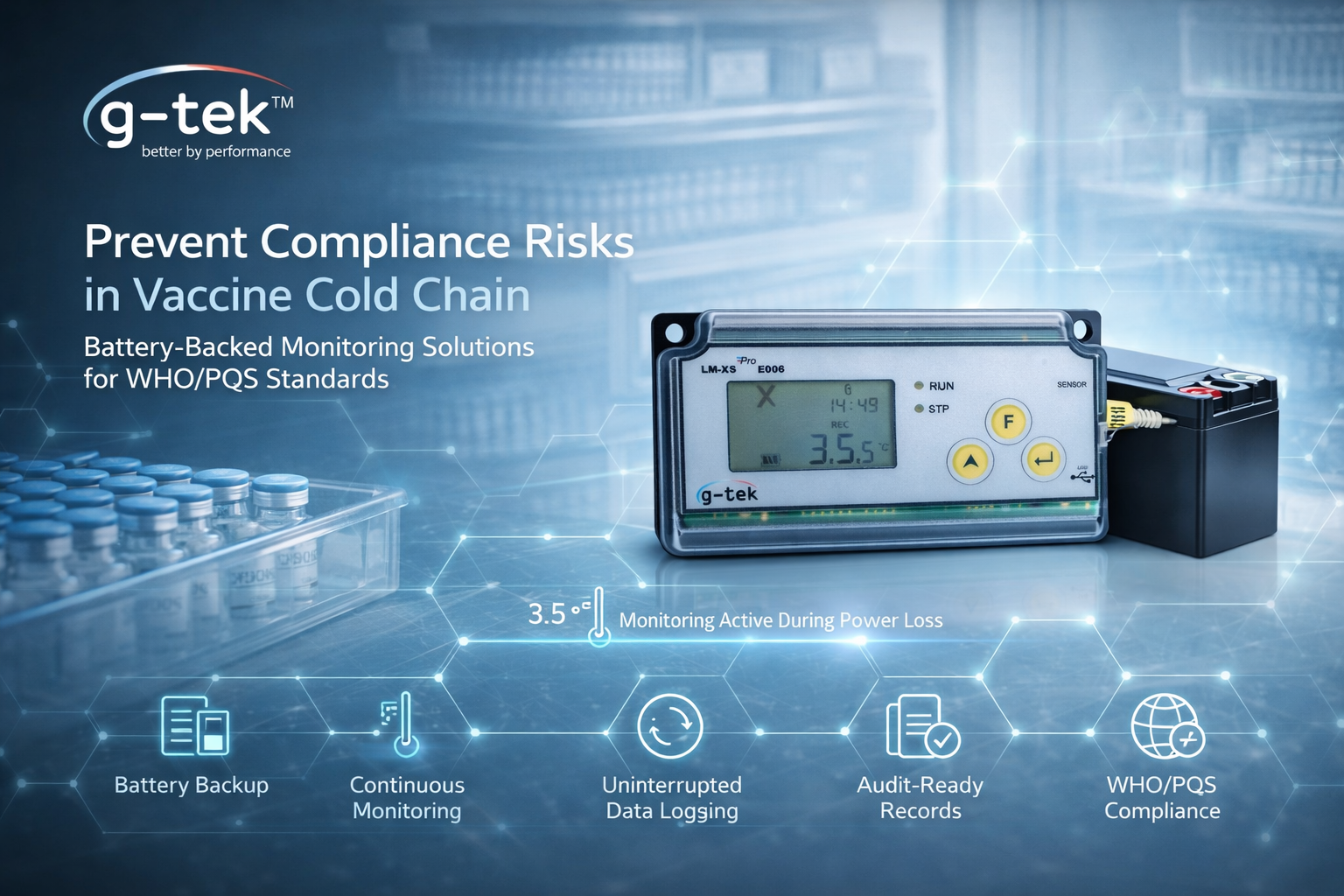
Every minute counts in vaccine storage and transport. A power outage might seem minor but…
5 Things You Must Know About Temperature Data Loggers & Temperature Recording
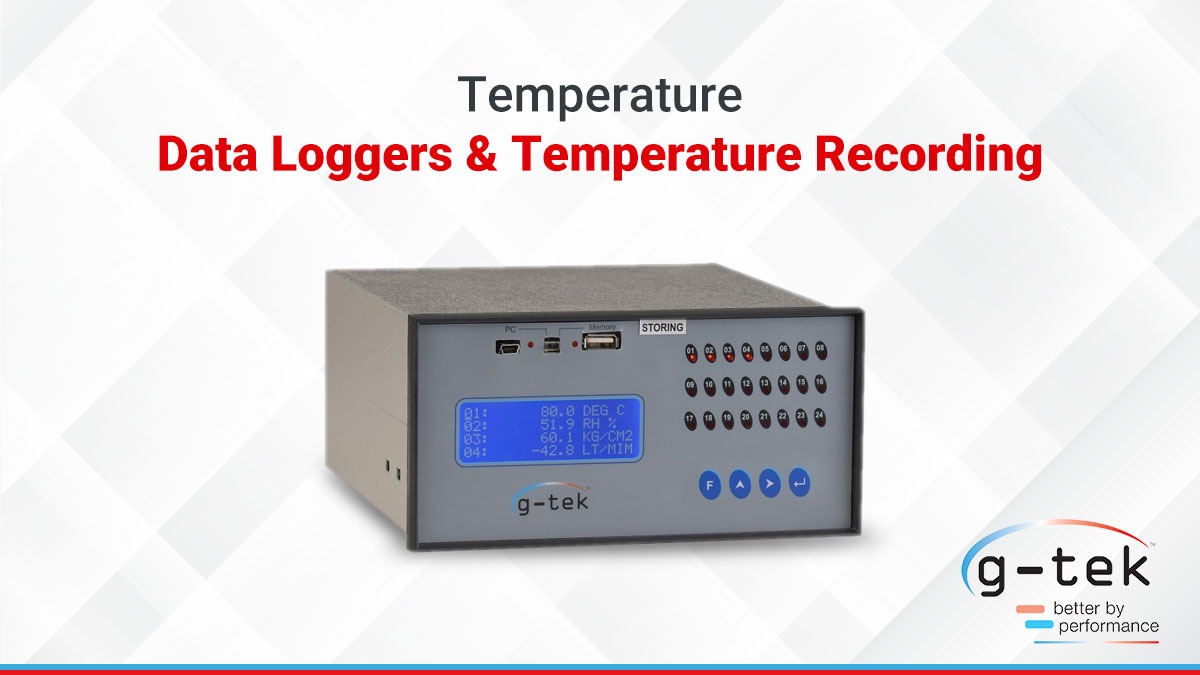
Temperature is the most common recorded physical measurement crucial for optimum operation, from the human body to an automobile engine. You can utilize the advancements in technology by incorporating temperature data loggers into your business’s recording and reporting processes. If you want to store their products, from food to pharmaceuticals, you must know the importance of adhering to the legal regulations to certify the safety of the products.
Five Most Important Things to Know about Temperature Data Loggers
It is important to consider various factors when using temperature data loggers. It ensures that the data is accurate and reliable as possible. Enlisted are the top five important aspects you need to consider.
Understanding your accurate requirements
Understanding your measurement accuracy requirement is essential regardless of whatever you want to measure. Accuracy specifications vary widely among different data loggers, and a good understanding of specific accuracy will help you pay for accuracy you might not require. When looking for accuracy specifications for a given data logger, look for charts that indicate accuracy over a measurement range instead of a single value.
Accuracy Requirements
- Different loggers have varying accuracy specifications.
- Tip: Always check accuracy charts across the measurement range, not just a single value.
- Avoid paying for unnecessary precision if your application doesn’t require it.
Anticipating your data access requirements
The simple standalone data loggers offload temperature data directly to a computer via a USB interface. However, wireless temperature data loggers transmit real-time temperature and relative humidity data from dozens of points to a central location. With a network, users can eliminate the chore of manual retrieval and offload data from individual loggers.
Data Access
- Standalone loggers: Offload data via USB directly to a computer.
- Wireless loggers: Transmit real-time temperature and humidity data to a central system.
- Benefit: Eliminates manual retrieval, saving time in large facilities.
Look for time-saving features
Everyone knows time is money, and therefore, selecting data loggers that would save time is an excellent choice. Look for the time-saving features in temperature data loggers, including memory capacity, deployment flexibility, durability, visual display, start and stop push buttons, and firmware upgrades. Some temperature loggers can operate in a statistics logging mode where they consistently calculate and display minimum, maximum, average, and standard deviation for measurements while recording.
Time-Saving Features
- Look for:
- Large memory capacity
- Deployment flexibility
- Durability
- Visual display
- Start/stop push buttons
- Firmware upgrade options
- Some loggers offer statistics mode (min, max, average, standard deviation) while recording.
Software Capabilities
Data loggers’ software enables the device to perform the task easily and quickly, including configuring parameters, starting the data logger, and offloading the data simply with a point-and-click system. Besides, the data logging software package must offer powerful data plotting capabilities with the ability to directly merge, append, and crop data. It further enables you to export data to other programs for analysis.
Good software should allow:
- Easy configuration and setup
- Point-and-click data offloading
- Powerful plotting tools
- Data merging, cropping, and exporting to other programs (Excel, CSV, PDF).
Power requirements
Data loggers are extremely low-power devices. Since users can use them in various environmental conditions and samples at different rates, the battery life varies widely. Ensure to opt for a data logger with one-year battery life at the logging rate you need. Look if the logger’s batteries are replaceable, as they are most convenient.
- Loggers are low-power devices, but battery life varies.
- Best Practice: Choose loggers with at least 1-year battery life at your required logging rate.
- Replaceable batteries are more convenient for long-term use.
Standalone vs Wireless Loggers
| Feature | Standalone Logger | Wireless Logger |
|---|---|---|
| Data Access | USB download | Real-time transmission |
| Setup | Simple, low-cost | Requires network setup |
| Best Use Case | Small labs, QA testing | Large warehouses, pharma cold chain |
| Cost | Lower | Higher (but saves labor) |
Why Choose G-Tek?
- G-Tek’s loggers cover –200°C to +200°C ranges.
- Easy-to-remove sensor connectors.
- Long-lasting batteries with NABL-traceable calibration.
- Designed for pharma, food, and industrial cold chain compliance.
At G-Tek, we believe that recording is the first step toward improving quality and performance. We strive to monitor and record all measurable process and environmental parameter that helps in improving the process, environment, and, therefore, the quality of the process environment. Our temperature data loggers can record a wide range of temperatures between -200 and +200 degrees Celsius. It comes with easy to remove sensor connector with a long-lasting battery.
Related Posts