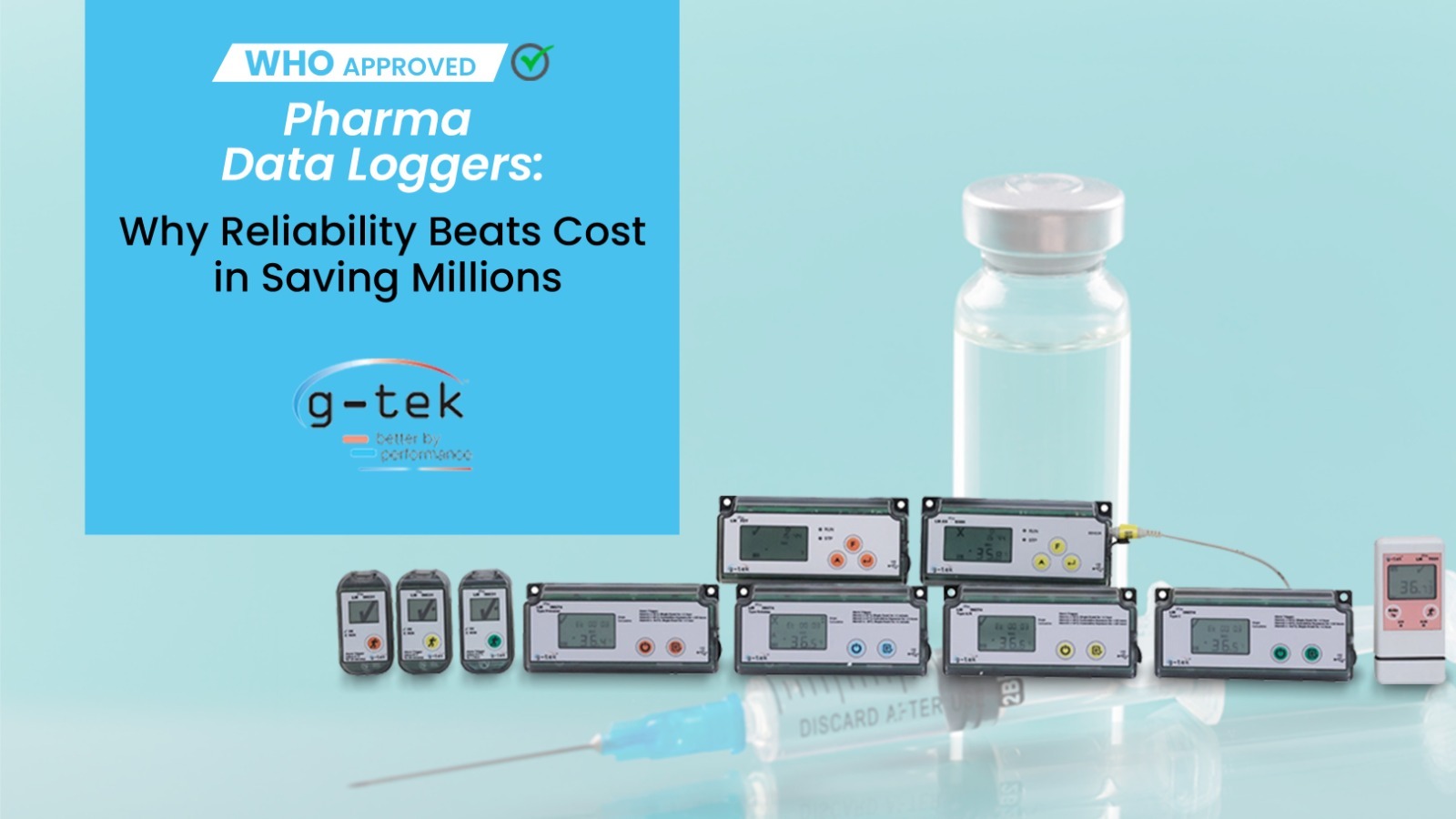
The Hidden Costs of Cheap Data Logger data logger in the pharmaceutical industry, where precision…
How Do Our Wireless Data Loggers Work?
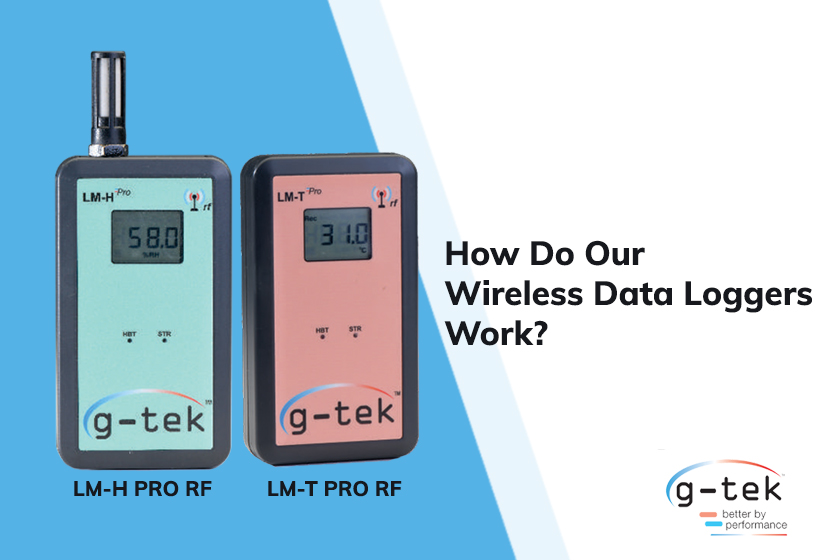
How Wireless Data Loggers Work
- Sensors: Measure parameters like %RH, temperature, and differential pressure.
- RF Transmission: Each logger has a transmitter/receiver operating at 869.88 MHz.
- Star Network: Devices form a star network with a central moderator node.
- Data Flow: Logger → Moderator → GtekNet™ software via Ethernet.
- Remote Access: Data viewable from any network-connected device using a standard web browser.
- Memory: Each logger stores up to 3000 data sets.
- Auto-Sync: If communication fails, missed data is automatically synced once reconnected.
The data loggers made by Gtek measure % RH, temperature, and differential pressure in the industry. The wireless data logger can monitor data across large areas as they do not have any kind of wiring. They are easy and quick to deploy. Each and every device sends the data directly to a central repeater device and from there it gets transmitted to GtekNet software over an Ethernet port.
The data can be checked from any network-connected device through a standard web browser. The data logger has an RF radio transmitter and receiver which operates at the frequency of 869.88 MHz. The data logger forms a star network with the moderator. The moderator is connected to client-server Gtek Net software through Ethernet.
If a new data logger is in the range of the central node moderator, it gets connected to GtekNet. Every device communicates its data to the moderator and gets captured in GtekNet. If any parameter of the data logger is changed or set from GtekNet it first goes to the moderator and then the device.
All the data loggers have a memory of 3000 data sets. If there is any type of miscommunication between moderator and device or moderator and GtekNet after reconnection, the missed data is automatically synced by GtekNet. In this way, none of the data is missed by the device.
Benefits
- No Wiring: Easy deployment across large areas.
- Real-Time Monitoring: Immediate visibility of environmental conditions.
- Compliance: Audit-ready records for pharma, food, and industrial applications.
- Reliability: Prevents data loss with auto-sync.
- Scalability: New loggers connect automatically if within range of the moderator.
Thus, we conclude that Gtek wireless data loggers should be installed by each and every organization in order to avoid excessive humidity and moisture which can eventually damage the working of computer systems.
FAQ
What parameters do G-Tek wireless data loggers measure?
They measure temperature, humidity (%RH), and differential pressure, making them suitable for pharma, food, and industrial monitoring.
How do wireless data loggers transmit data?
They use RF radio frequency (869.88 MHz) to send data to a central moderator, which then connects to GtekNet™ software via Ethernet.
Can data be accessed remotely?
Yes, data can be viewed from any network-connected device using a standard web browser.
What happens if communication fails?
Each logger stores up to 3000 data sets. If communication is interrupted, GtekNet™ automatically syncs missed data after reconnection.
Why should industries use wireless data loggers?
They eliminate wiring, reduce installation costs, provide real-time monitoring, and ensure audit-ready compliance for regulated industries.
Related Posts