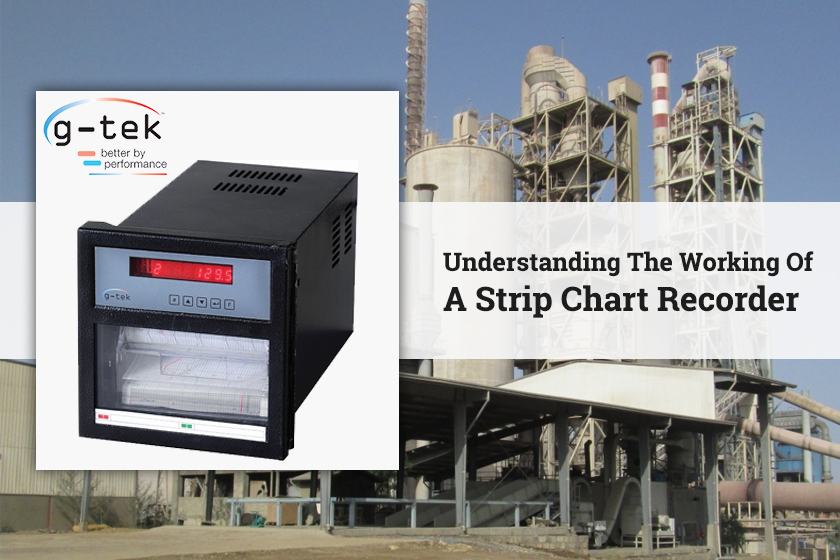
How to Select a Perfect Strip Chart Recorder

A chart recorder is a device that records electrical or mechanical input on a piece of paper. Chart recorders can record several inputs by using different color pens and may record on circular or strip charts.
Chart recorders might be entirely mechanical with a clockwork mechanism, electro-mechanical with an electrical clockwork mechanism, and entirely electronic with no additional components required.
Chart recorders mainly have three formats. The strip chart recorder has a long strip of paper that comes out of the recorder. Roll chart recorders are very much similar to strip chart recorders except for the fact that the recorded data is stored in a round roll and the unit is completely enclosed.
When Choosing a Strip Chart Recorder
- Number of Inputs Required
- Decide how many parameters (temperature, pressure, flow, etc.) you need to record.
- Multi-input recorders allow simultaneous monitoring.
- Type of Inputs
- Different processes may require recording electrical signals, mechanical inputs, or environmental parameters.
- Ensure the recorder supports the required sensor types.
- Color Differentiation
- Multiple pens with different colors help distinguish trend lines for each input.
- Useful in complex monitoring setups.
- Mounting Style
- Panel-mounted recorders integrate into control systems.
- Bench-style recorders are portable and suitable for labs or smaller setups.
- Format Preference
- Strip chart recorders: Long strip of paper for continuous monitoring.
- Roll chart recorders: Data stored on a round roll, enclosed unit.
- Circular chart recorders: Compact rotating disc, frequently replaced.
Chart Recorder Types
| Type | Format | Best Use Case |
|---|---|---|
| Strip Chart Recorder | Long strip of paper output | Continuous monitoring, labs |
| Roll Chart Recorder | Round roll, enclosed unit | Secure storage, industrial |
| Circular Chart Recorder | Rotating disc of paper | Compact setups, cleanrooms |
| Electronic Data Logger | Digital storage, no paper | Modern compliance, pharma |
Circular chart recorders have a rotating disc of paper that has to be replaced frequently but is compact and amenable to being enclosed behind the glass. Electronic data joggers have replaced chart recorders in many ways but still, the use of chart recorders is evident everywhere.
Many applications are suitable and require the installation of a chart recorder. Before choosing a chart recorder, one has to keep in mind the following questions :
- How many inputs are required to be recorded?
- What types of inputs should be recorded?
- Different input types are required to be recorded in the same unit.
- Availability of color differentiation for trend lines?
- The recorder should have a panel mounting or bench style.
At G-Tek, there is an availability of strip chart recorders which can be helpful in boosting your business to a great extent.
FAQ
What is a strip chart recorder?
It is a device that records electrical or mechanical inputs on a long strip of paper, providing continuous monitoring.
How is a strip chart recorder different from a circular chart recorder?
A strip chart uses a long strip of paper, while a circular chart uses a rotating disc that must be replaced frequently.
What inputs can a strip chart recorder handle?
It can record multiple inputs such as temperature, pressure, and electrical signals, often with color-coded pens.
Should I choose panel-mounted or bench-style?
Panel-mounted recorders are ideal for integrated plant systems, while bench-style recorders are portable and suited for labs.
Are electronic data loggers replacing chart recorders?
Yes, electronic loggers offer digital storage and compliance benefits, but chart recorders are still widely used in industries requiring physical records.
Related Posts